

Introduction
The future of logistics is faster, smarter and outsourced
Over the past decade, outsourcing logistics to third-party experts has grown exponentially. Why?
To understand what’s driving this rapid change, as the world’s largest pure-play contract logistics provider, GXO conducted a survey of supply chain leaders across the U.S., the UK and Europe to explore how they are utilizing outsourced logistics today, to identify the key factors driving the industry’s growth and to better understand the perceived challenges keeping some companies on the sidelines.
It’s well understood that supply chains today are becoming increasingly complex, consumer behavior is changing, technology is being deployed at an accelerated pace and ecommerce continues to transform the retail landscape.
Our findings indicate that against this backdrop, leading global brands are outsourcing logistics as part of a broader strategy to improve efficiency, productivity and accuracy. There is a growing appetite and appreciation for the benefits of partnering with third-party logistics providers (3PLs), especially for the most resource-intensive operations that require the intimate knowledge of an industry expert.
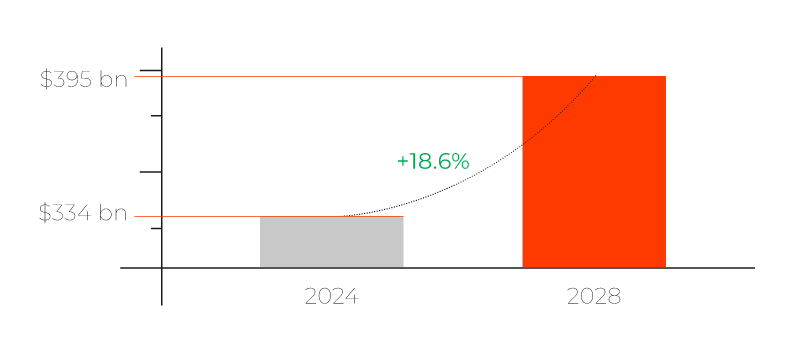
These findings align with industry projections that the global contract logistics marketsize is expected to grow from $368 billion dollars in 2025 to $568 billion dollars in 2030 – with a compound annual growth rate (CAGR) of 9%.
As we delve deeper into the survey results, we will uncover the specific strategies and innovations that are driving this shift towards outsourcing and how leading companies are leveraging third-party logistics providers to stay ahead in an increasingly competitive and complex market.
Accelerating growth
What’s driving the growth in third-party logistics?
Logistics as a key competitive advantage and a revenue driver
As rising costs and economic headwinds impact businesses worldwide, companies are increasingly looking to streamline their complicated supply chains and improve their bottom lines. New companies are even breaking into their respective industries with logistics functions that are already outsourced, so that they can compete faster and more aggressively.
88%
of respondents are currently engaged in outsourcing part of their logistics.
Amongst them:
> 73% are outsourcing transportation operations
> 61% are outsourcing warehouse operations
> 36% are outsourcing reverse logistics operations
Underscoring this growing strategy of logistics outsourcing, a substantial 88% of survey respondents are currently engaged in outsourcing at least some part of their logistics operations and 61% of them are currently outsourcing warehouse operations.
Logistics outsourcing can help businesses gain an edge in their industry.
58%
of respondents view the ability to focus on their core competencies as the biggest benefit of outsourcing.
The number one benefit of outsourcing logistics cited by survey respondents is the ability to focus on their core business, with 58% indicating this as the primary advantage.
Additional opportunities are improved efficiency and productivity, with 43% of respondents highlighting these benefits. Leveraging advanced systems, processes and technologies can boost efficiency, reduce errors and improve order accuracy. These streamlined operations can lead to material cost savings, with 41% of respondents indicating cost reduction as a key benefit of outsourcing logistics.

Logistics evolution
High-impact logistics opportunities, beyond the basics
As the industry has innovated over the past decade, expertise and services have significantly expanded.
Logistics outsourcing now offers robust operational expertise and powerful technology that unlocks efficiency across a business’ operations. Third-party logistics providers have expertise and technology that individual companies do not, creating a “multiplier effect” that improves cycle times, service quality and workforce safety.
10x
For example, across a sample of our customer contracts, customer spend on GXO’s logistics services is returned by a factor of 10x through lowered supply chain-related costs, higher revenues and faster inventory turnover.
Put simply, logistics is a lot more than it used to be.
Increasingly, companies are realizing just how powerful the results of logistics outsourcing can be, not only in transforming company operations, but in driving revenue through enhancing the customer experience.
Now, providers can support on broad mandates that range from workforce management, reverse logistics and value-added services that extend capabilities beyond pick, pack and ship, including personalization, co-packing and fraud management.
Reverse logistics (or returns) is an especially compelling area of the market with huge potential to realize cost savings. According to the U.S. National Retail Federation, an estimated 15.8% of purchases were returned in 2025, with a total returns value projected to reach $850 billion for the retail industry. Clearly, minimizing cost and maximizing accuracy in managing the returns logistics process is critical for maximizing a business’ bottom line.
Yet, only 36% of respondents indicated that they currently outsource their reverse logistics operations. This presents a significant opportunity for companies to gain efficiencies. In fact, logistics capabilities have reached a point where companies can turn returns into the “lowest-cost stock.” This can be achieved in a few ways:

Leveraging analytics that can calculate expected returns and then prioritize the highest-value products to maximize potential resale;

Reliably and quickly repairing returned products to get them back on the market;

Employing data science to divert products from disposal that could actually be reused
These practices enable customers to quickly disposition returned products and increase reclamation value.
96%
More than 170 million returns are processed each year at GXO facilities alone – 96% of which are returned to stock.
Expertly managed transportation services can be another key aspect of streamlining logistics functions and getting products to consumers as quickly and seamlessly as possible. 73% of respondents are outsourcing transportation operations.
GXO offers managed transportation, dedicated fleet and multi-client transport services for customers across a wide range of industry sectors. Our priority is to deliver safe, cost-effective transportation, commit to on-time in-full (OTIF) deliveries and enable scalable operations that support our customers’ growth, with sustainability at the heart of all we do. Tailored solutions can range from standalone transportation services to a fully managed offering, with the added benefit of incorporating warehousing and value-added services.
Large-scale logistics providers are increasingly handling a wider range of value-added services that can be customized for individual requirements. This includes product personalization, gift wrapping and engraving, co-packing, kitting and bundling.
Co-packing is a good example of a value-added service that is experiencing increasing demand. A co-packing solution consists of combining two or more similar products to create a single co-pack of consumer sales units. Co-packing can return dramatic efficiencies for customers and has become a popular way for retailers to handle large volumes without adding extra staff or equipment. GXO can very efficiently shrink-wrap, label, fill boxes, take quality-control measures and assemble units for promotional marketing.

Tech-powered transformation
Leveraging advanced technology to unlock logistics potential
65%
of respondents cited the integration with existing systems as one of the main challenges in adopting logistics technology
Other concerns being implementation costs and the need for training and skill development. As a leader in tech-enabled fulfillment, GXO has dedicated implementation teams partnering with IT, operations and leading technology providers, ensuring that new technologies and processes are successfully integrated into logistics operations for a seamless transition.
The data is clear that deploying the right logistics technology can improve accuracy, reduce costs, provide a better work environment for employees – and enable operations to flex with demand, deploying resources where they have the most benefit.
Logistics technology can range from large scale automation across entire warehouses to smaller, adaptive technologies used inside warehouse operations as well as software and AI that deliver smarter, faster, more agile supply chains.
Large scale, fully automated warehouses are built from the ground up and are highly customized to meet the specific needs of each customer. These technology ecosystems combine innovative automation and systems for greater flexibility, ability to manage complex inventory levels and better outcomes for our customers.
Automation has delivered game-changing results for GXO customers including:
65% reduction in variable costs
10% improvement in order accuracy
60% reduction in inventory wastage
80% reduction in staff training times at the site-level
50% improvement in inventory efficiency
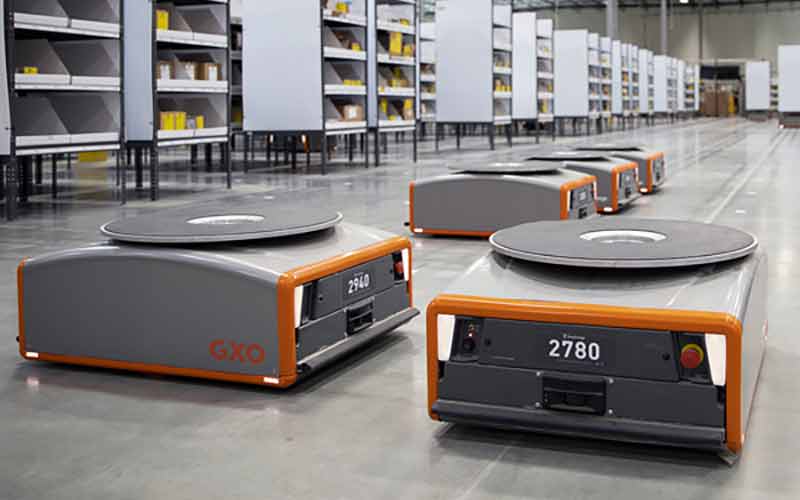
There are benefits with smaller tech too. Adaptive or modular technology solutions are small, flexible and scalable and can be added to an existing warehouse to enhance operations, reduce costs and improve safety. There are several types of automation that can be deployed in this category, including collaborative robots, robotic arms, scanners and wearable-vision tech. These support various functions throughout the warehouse from picking and engraving to identifying products. These technologies can be implemented in a matter of days and produce immediate results.
Productivity gains from modular technologies have delivered:
2x increase in productivity with cobots
4x increased productivity with goods-to-person robots
8% increase in processing speeds with vision technology
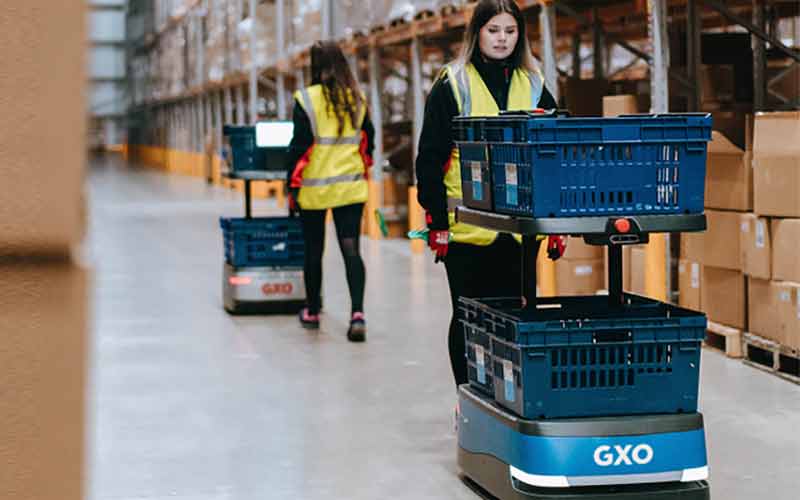
Beyond automation, software and AI solutions can boost productivity significantly. Customers gain real-time visibility, using advanced forecasting solutions to help manage inventory, team members and more.
One example is GXO IQ, our cloud-native AI powered platform that leverages a suite of proprietary AI algorithms to intelligently orchestrate millions of complex, multi-step actions, from inventory distribution and movement, to order picking, packing, shipping, and staffing. Customers are empowered with seamless and secure access to critical warehouse data.
Combining robotics and AI can automate fulfillment, driving productivity in the multiples. For example, GXO has successfully integrated AI with a goods-to-person robotics solution into multiple sites, increasing the number of barcodes scanned by around 5X per bot stop.

Perception vs reality
What is holding companies back?
Our survey suggests that some companies are losing out on the benefits of logistics outsourcing due to outdated misconceptions about the capabilities and benefits.
Control
43%
of executives expressed the concern that they could lose control when outsourcing.
Yet, some respondents noted that outsourcing logistics allowed them to leverage cutting-edge technology and expertise that their companies otherwise would not have accessed. Armed with an understanding of intricate supply chains across industries, logistics specialists bring deep operational expertise and proven processes that help standardize and optimize performance. Leveraging advanced visibility tools, real-time data dashboards and predictive analytics give businesses unprecedented insight into their supply chains, enabling faster and more informed decision-making.
Rather than diminishing control, outsourcing logistics can empower businesses with the tools, expertise, and structure needed to operate with greater precision and agility.
Cost
40%
of respondents are concerned about cost control.
Despite a misconception that logistics outsourcing can be expensive and unaffordable, scale and technology have changed the outsourcing equation for companies of all sizes. 41% of respondents cited cost savings associated with logistics outsourcing as a significant benefit. By outsourcing logistics, companies can avoid the high capital expenditures associated with maintaining warehouses, transportation fleets, and specialized logistics personnel.
This isn’t just true for global blue chips: there are solutions for companies of any size that will deliver immediate and long-term value. For example, GXO offers a solution for expertly managed multi-tenant warehousing, resources and capacity on demand. Designed for both established and emerging brands, it offers transparent, pay-as-you-grow pricing, and flexible capacity that can be scaled up or down with demand.
Ease of transition
38%
of survey respondents shared concerns about the perceived disruption involved in outsourcing logistics operations.
However, outsourcing can happen very quickly with minimal risk and immediate payoff.
A skilled logistics provider takes on the “legwork” to make your logistics outsourcing experience easy.Logistics providers can immediately enhance a company’s performance and deliver value.
In the case of one customer, GXO executed a takeover in place within 72 hours of signing the contract, and within 30 days, a previously underperforming site was meeting or exceeding all KPIs. A seamless handover such as this immediately delivered measurable results for the customer.
A leading travel retail company took its first step into logistics outsourcing by partnering with GXO and the results have exceeded expectations. In just a few months, they successfully consolidated operations from three distribution centers into two, significantly improving efficiency and unlocking meaningful cost savings. Buoyed by the success of the partnership, the retailer is now exploring opportunities to expand its partnership with GXO internationally.
Summary
Partnering for success
Logistics outsourcing today is very different from even a few years ago. And the market continues to evolve to address the needs of customers of all sizes.
In today’s market, characterized by economic uncertainty and complexity, leveraging a 3PL to gain specialized logistics expertise is a top strategic priority for companies looking to improve efficiency, productivity, accuracy and to fuel competitiveness. As the survey reveals, the case for outsourcing is clear and the time to act is now.